What Are the 5 Facial Planes – and Why Do They Matter in Aesthetics?
When we talk about aesthetic treatments – whether it’s anti-wrinkle injections, skin boosters, or microneedling – we’re not just working with the surface of your skin. We’re working with layers, known as the facial planes, and each one plays a unique role in how your face looks, moves, and ages.
If you’ve ever wondered why certain treatments are done in very specific ways, or why your practitioner focuses on technique so much, this is why!
Let’s break down the 5 facial planes and why they’re so important.
1. The Skin
This is the top layer we all see and touch every day. It includes both the epidermis (your outermost barrier) and the dermis (where things like collagen and elastin live). Treatments like microneedling, facials, and peels target this layer to improve skin texture, glow, and overall health.
2. Subcutaneous Fat
Beneath the skin lies a soft layer of fat pads that give your face its natural shape and volume. Over time, these fat pads can shrink or shift, which is why we start to see sagging or hollow areas. Dermal fillers often work at this level to restore volume and contour.
“Understanding the facial planes helps ensure that every tweak or enhancement works with your natural anatomy — not against it.”
3. SMAS (Superficial Musculoaponeurotic System)
Don’t worry – no need to pronounce it! The SMAS is a fibrous layer that connects your facial muscles to the skin. It’s a key player when it comes to lifting treatments (like facelifts or HIFU) because it provides structural support to your face.
4. Muscle
This is where your facial expressions live – smiling, frowning, squinting... the works! Anti-wrinkle injections like Botox target this layer to soften movement and reduce lines while still keeping things natural.
5. Bone & Deep Structures
Right at the base are your facial bones and deep fat compartments. These are the “scaffolding” of your face. As we age, bone density can reduce, which changes the structure of the face. Certain filler techniques go deep to add subtle support where needed.
“A good aesthetic result doesn’t just look ‘done’ — it looks balanced, harmonious, and authentically you.”
Why This Matters
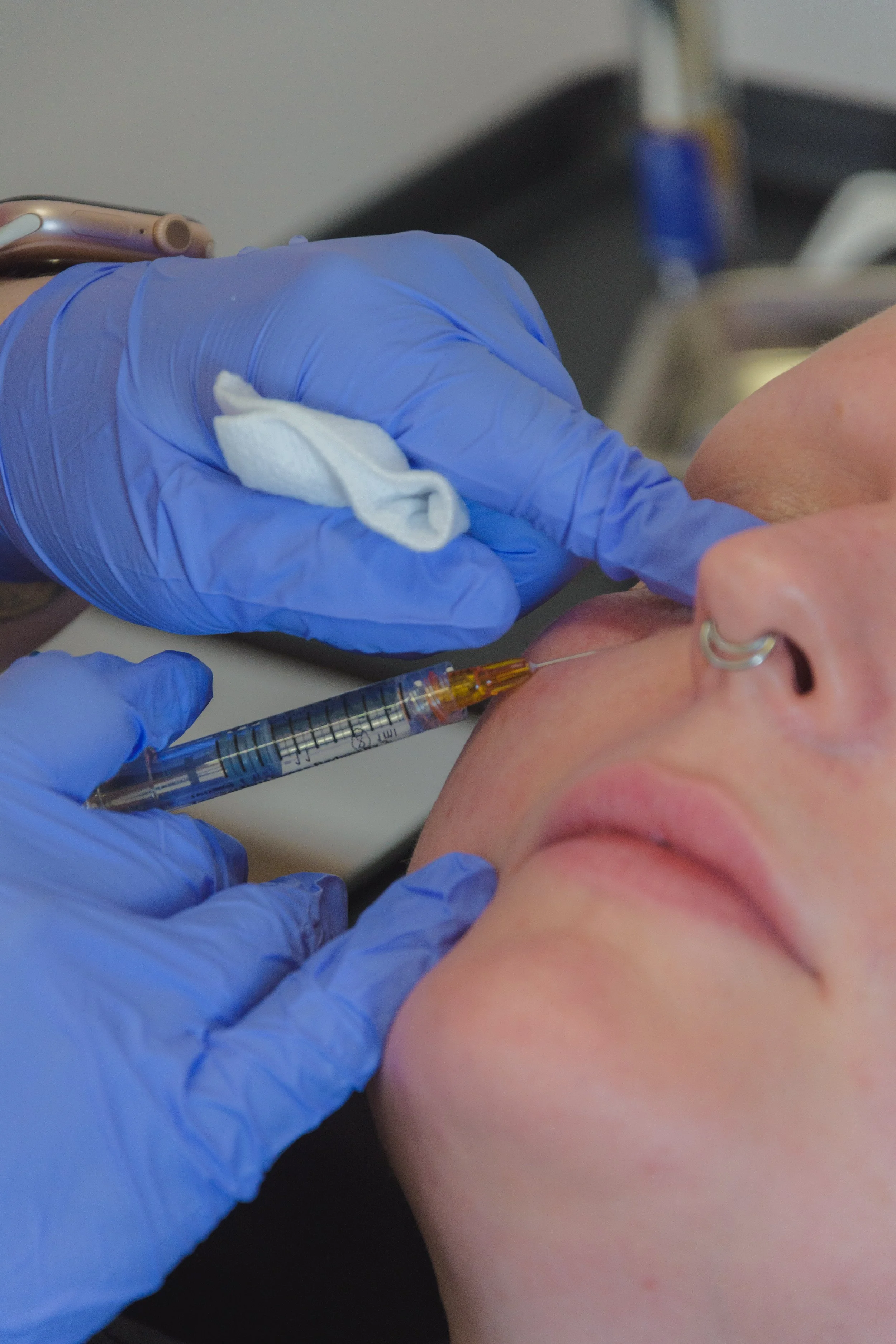
Understanding facial anatomy means your treatments can be tailored to you – not just what’s trendy. It’s also how trained, ethical practitioners make sure treatments are safe, effective, and natural-looking. It’s not about “filling lines” – it’s about working with your face holistically.
When you’re in my hands, I’m thinking far beyond the surface. Every treatment is planned with care, knowledge, and a whole lot of respect for the way your face is built.